

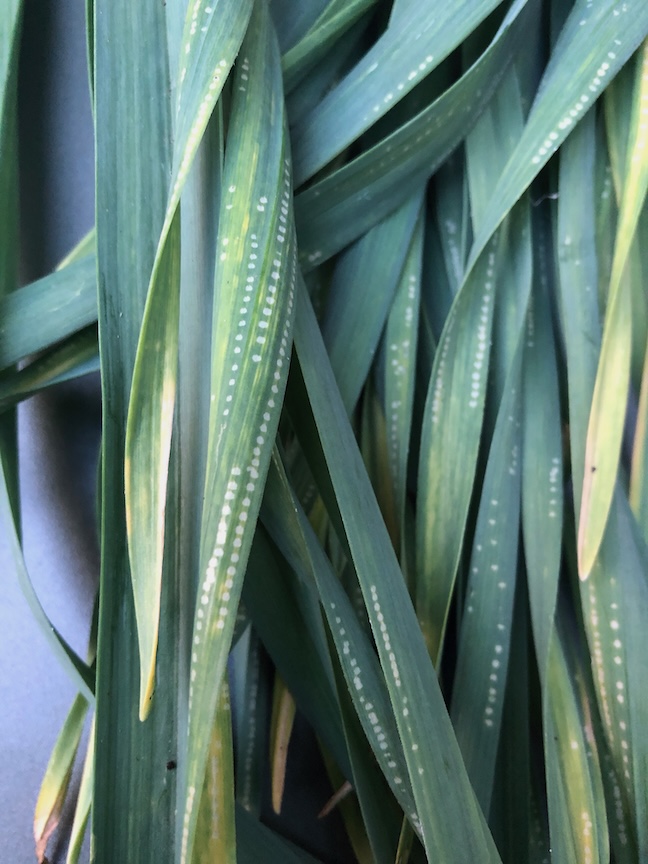
The slender, waxy green leaves of garlic were starting to look discolored.
The cloves were planted last fall, sprouted in consort with crocus blooms and were standing tall.
After close inspection, foliage showed long lines of tiny white dots indicating the plant was infested with a relatively new pest called allium leaf miner which attacks garlic, onions and other plants from the same family.
This is the point that panic can set in for gardeners, whether it’s a pest or disease, that’s the wrong way to react.
Whenever a problem like this happens, there’s plenty of time to figure out the issue along with implementing a plan of action to specifically target the pest or disease without disrupting the delicate balance of nature.
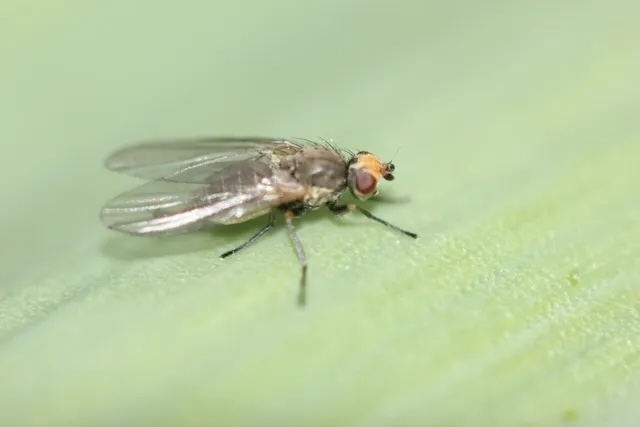
Allium leaf miners emerge in early spring as the plants sprout. The adults are a small fly that lay eggs in the foliage. When the larvae hatch, they tunnel through the leaves headed for the bulb. They can kill the plant or severely disfigure the bulb.
In the case of this garlic, hopefully the larvae have not hatched. Any foliage with the markings is trimmed off and destroyed, it can’t go into the compost pile as it would perpetuate the pest.
Then the plant is sprayed with an organic product called Spinosad, commonly offered as Capt. Jack’s Dead Bug Brew. Even though the leaf miner is inside the leaf, the Spinosad will reach the pest.
To increase the effectiveness of the Spinosad, adding a teaspoon of insecticidal soap as a surfactant will help the organic product stick to the foliage.
Spinosad should be applied early in the morning before bees start flying, even though it’s organic and not a poison, it can still negatively effect pollinators.
Once a pest like this has discovered the garden, more needs to be done as the season progresses.
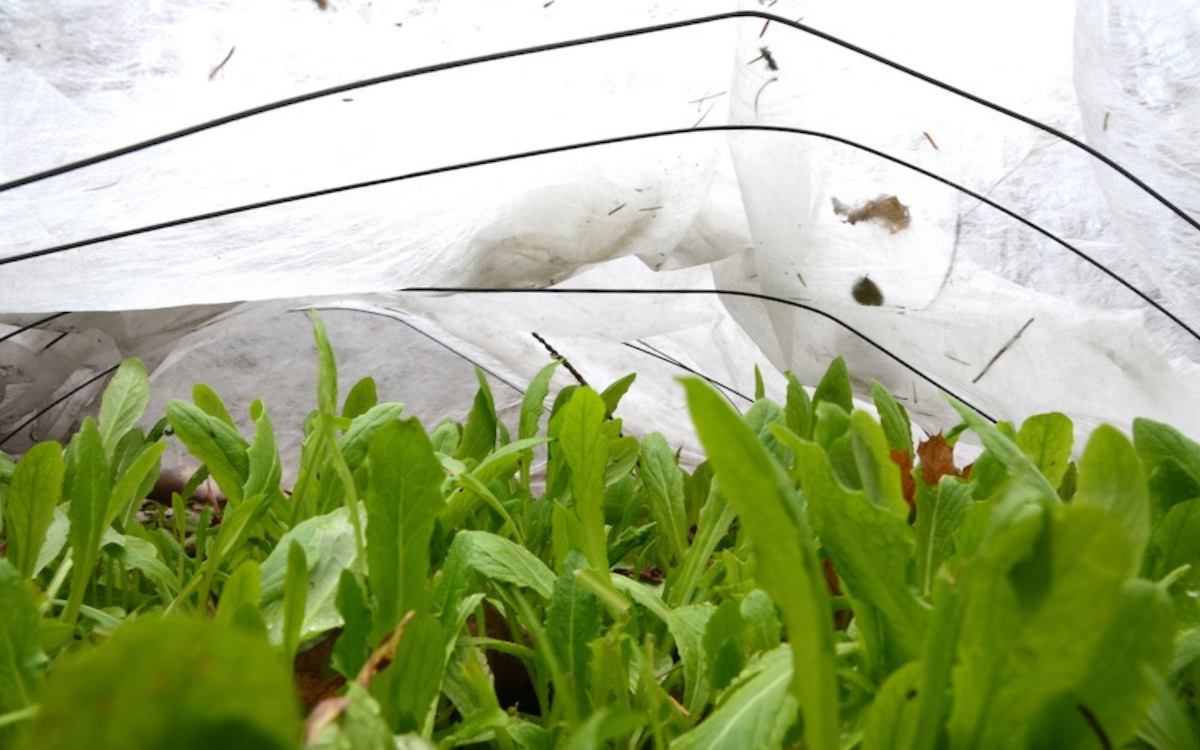
At this point the first generation of adult allium leaf miners have stopped laying eggs. If it was any earlier, the plants should be covered with a floating row cover. It’s a spun bound translucent lightweight fabric that acts as a physical barrier against the pest.
The second generation will be laying eggs in September and October, so it’s recommended that garlic is planted in November, after the adults are done laying and then covered with a floating row cover for the winter so the spring emerging pest can’t get to the plant.
Floating row covers are just one of the way organic gardeners deal with pests. It’s also a great way to foil cabbage worms too. It prevents the cabbage white butterfly from laying eggs on anything like kale, broccoli, cabbage and other cole crops. Without the eggs, there will be no cabbage worms on the plant.
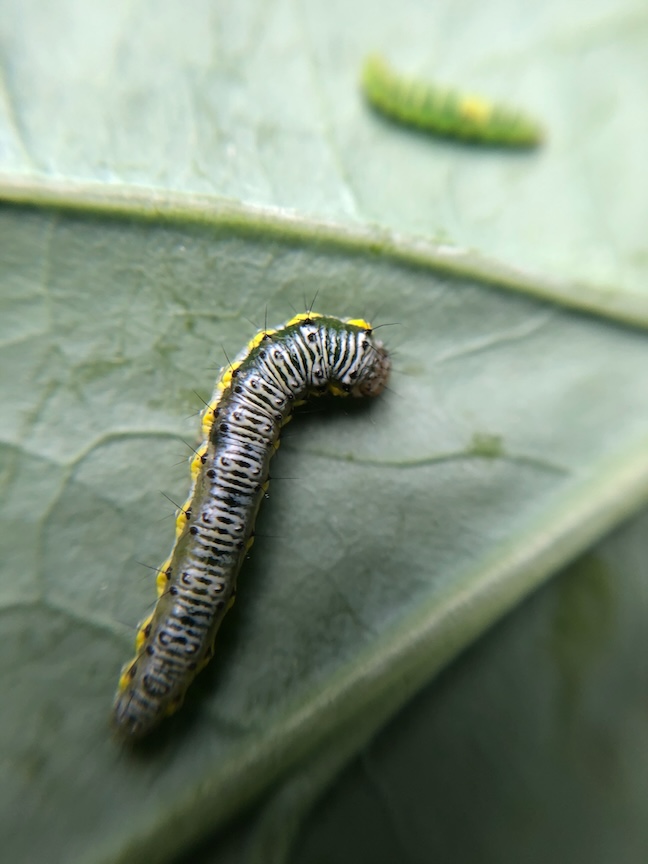
The other control is Spinosad which works for all chewing insects including a host of caterpillars, Japanese beetles and other pests.
When dealing with sucking insects like aphids, spider mites, whiteflies and others, insecticidal soap or horticultural oil does the trick.
These are not toxic poisons, they cover the insect and will stop it from feeding. Often it takes three applications in a month or so to completely be rid of the infestation.
These products can’t hurt the good bugs, our families and anyone living downstream.
Our culture can vilify insects, but 99 percent of the bugs in the garden are either good or benign.
Another issue for gardeners includes fungal issues like powdery mildew and black spot. The plants are usually infected during a wet, cold spring, then the disease manifests itself during the humidity of summer.
Powdery mildew affects lilacs, phlox, vine crops like squash and other plants. It’s a mostly aesthetic issue covering the foliage with a whitish, powdery coating.
Black spot infects roses, turning the foliage yellow with dark spots and defoliating, but rarely killing the plant.
One of the keys to dealing with fungal issues is treating them before seeing signs of damage, which is counterintuitive to how most garden problems are dealt with.
If there’s a plant which always gets powdery mildew, black spot or another fungal issue, use an organic fungicide as the plant leafs out and continue applying according to the label directions. Often, it’s every two or three weeks.
Revitalize from Bonide is a biological control which stops the fungal spores from reproducing. It’s very effective against a host of fungal issues and safe to use around children and pets.
Everyone will deal with problems when gardening; by reaching for safe organic products, the good bugs can help us garden and we’ll control the bad ones along with diseases too.
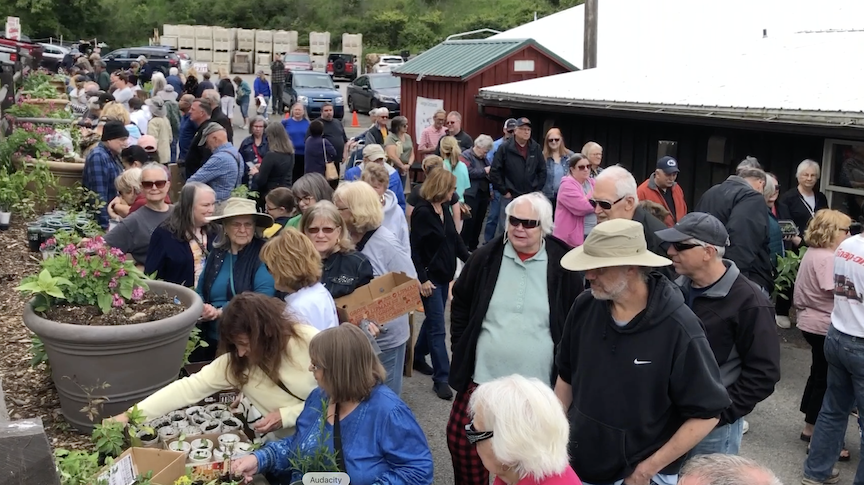
Doug’s Plant Swap on May 31, 2026
Join me at Soergels Garden Center in Wexford for the 23rd Annual Doug Oster Plant Swap/Giveaway and Pepperpalooza on Sunday May 31,2026 from 1 p.m. until 2 p.m.
For 23 years we've been getting together to trade plants. It's so much fun!
It’s a place for gardeners to trade with each other. Bring divisions from your garden to swap, be sure plants are labelled and please don’t bring anything invasive.
I’ll also have lots of ‘Limbaugh Legacy Potato Top’ tomato plants to pass out while supplies last. One plant of each per family please. BE THERE AT 1 p.m., IT’S CRAZY AND OVER IN 20 MINUTES!
This year, we’re adding something extra after the swap called Pepperpalooza!
Over the last few years I’ve been impressed with the unique varieties of peppers offered by Soergels. Varieties I’ve never seen at nurseries.
The team there is letting me talk about these cool peppers and will be selling them cheap.
I’m also bringing peppers to giveaway too related to my obsession with black artist Horace Pippin.
The WWI veteran was shot during the war, struggled with arthritis in his shoulder and used bee sting therapy to ease the pain.
He traded pepper seeds with a beekeeper for the bees.
‘Fish’ pepper has a long history with African Americans. It’s a hot pepper with variegated foliage that starts white, eventually turning red when ripe.
Buena Mulata’ has long, thin purple peppers which turn brown, then yellow and finally red. It’s a medium hot cayenne type.
‘Pippen’s Golden Honey’ sweet pepper is black, transforming to yellow then red.
You don’t have to have plants to swap, just come and get some plants and meet like-minded gardeners, it’s fun.

Subscribe to my free gardening newsletter here
Host of "In Doug's Garden" on CBS KDKA-TV Streaming
Host of the Talking Trees podcast for The Davey Tree Expert Company
Consultant for Farm to Table Buy Fresh Buy Local
Columnist for Pittsburgh Earth Day's "The Green Voice"
Leave A Comment