GREEN LIVING
National Honey Bee Day
By Bria Zegarelli
 August 15, 2026
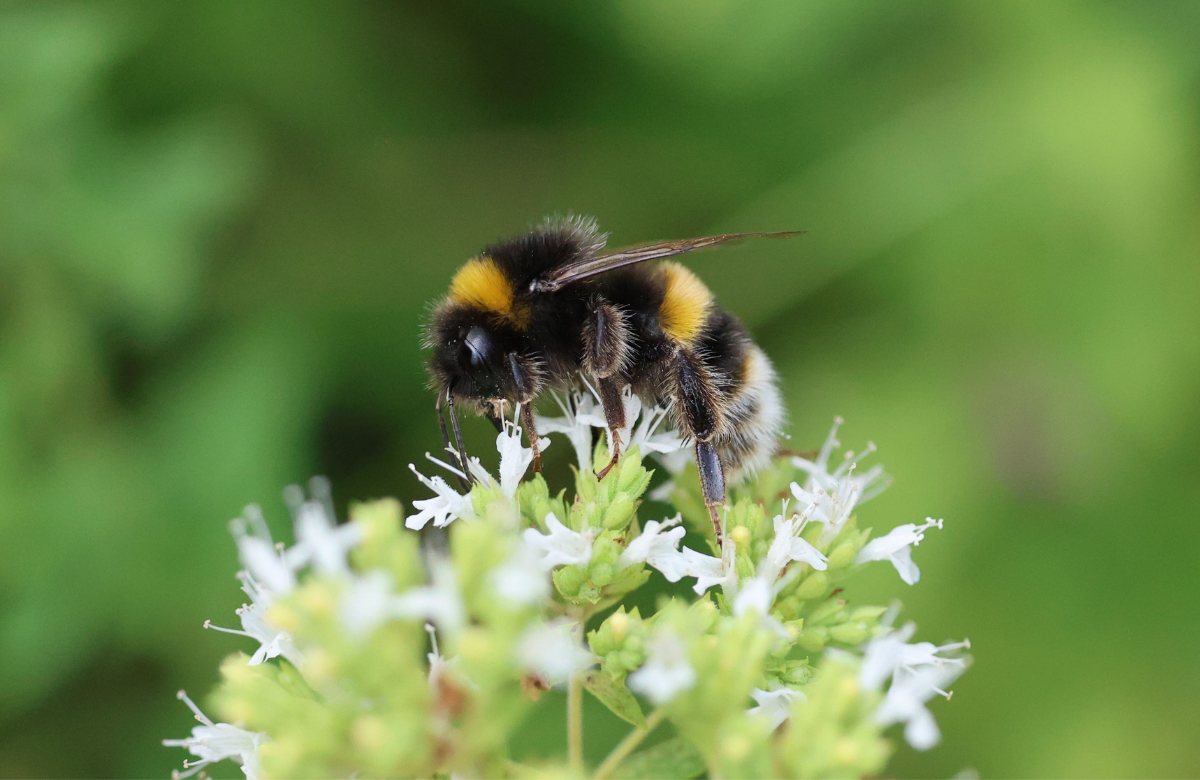
Bees are an incredible part of our ecosystem, helping to reproduce about 180,000 different plant species through their pollination process. In other words, we absolutely need bees and all of the benefits they bring!
With the summer season, it is common for people to partake in gardening around their homes or communities – and without bees, none of these gardens would be possible. Whether you have a large garden or just a few plants in your yard, keeping the area bee-friendly is essential to supporting your local ecosystem.
In honor of National Honey Bee Day (August 15th), consider making these changes around your yard!

Plant bee-friendly flowers
Choose a wide range of flowers so your garden attracts many kinds of pollinators and so bees have more options for pollinating. It is also recommended to choose flowers that bloom at slightly different times so bees can have a more consistent source of nectar. Some popular options include lavender (spring), California lilacs (spring), sunflowers (summer), coneflowers (summer), asters (fall), and goldenrod (fall). Native plants are also especially helpful for local pollinators since they are already adapted to the local environment.
Add shallow water
While bees do not need water to pollinate, they still need it to survive, specifically through hydrating the rest of the hive, feeding larvae, and diluting crystallized honey. Adding a shallow dish or birdbath of water near your garden can help provide this water source for the bees. Also consider adding some stones or marbles so the bees can land safely.
Plant in clusters
Grouping your flowers together (specifically large patches of colorful ones) helps bees find pollen easier. Bees prefer to stick to one specific type of flower per trip, so big groups of flowers from the same species are more attractive to bees and encourage them to keep coming back.
Allow for bare ground
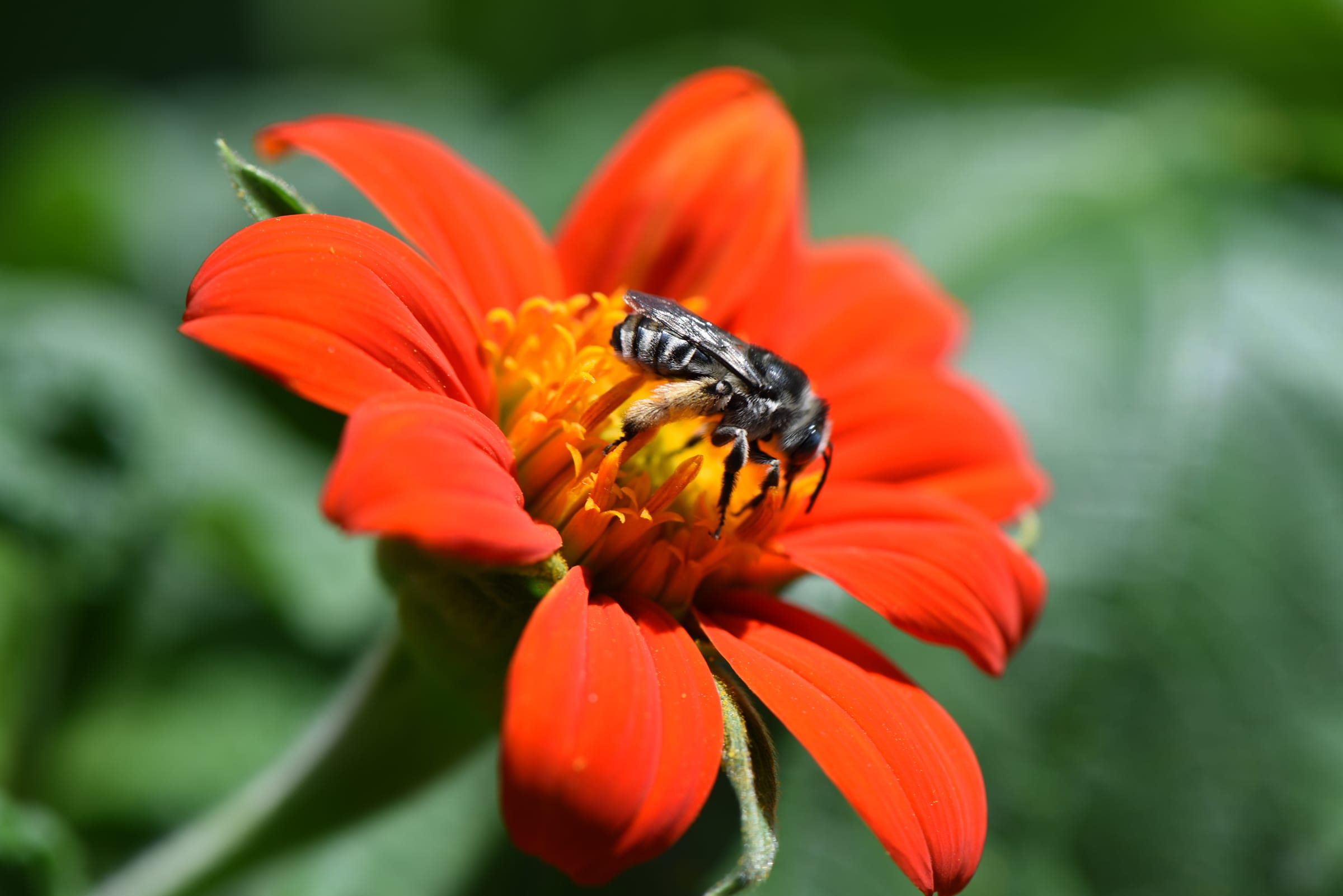
Approximately 70% of bee species nest in the ground. This does not apply to honeybees, who build stereotypical, above-ground hives; however, leaving undisturbed soil between your flower patches can allow for other types of bees to safely burrow and make your garden even more beautiful!
Plant flowering herbs and vegetables
If you’re more of a food-gardening person rather than a flower-gardening one, consider planting herbs and vegetables that bloom. Beans and members of the cucurbit family (squash, zucchini, cucumbers, and pumpkins) are usually top choices for this. You can also have success with brassicas (broccoli, cabbage, and kale) and root vegetables if you let them flower instead of harvesting all of them during peak season.
Avoid pesticides
When possible, try to avoid pesticides – yes, they get rid of harmful insects, but they also deter beneficial pollinators that are essential to your garden. Try to use organic pest control methods or treat your plants in the evening when bees are less active.
Plant trees and shrubs
Because trees and shrubs can have thousands of blossoms at once, they are wonderful sources of nectar and pollen for bees. Fruit trees are definitely a popular option for this since they provide a delicious treat for all of us while sustaining native bee species nearby.
Avoid double-flowered plants
Double-flowered plants–such as roses, tulips, carnations, and peonies–have multiple layers of petals that often replace the plant’s reproductive organs and block bees’ access to nectar. Some of these plants are even sterile because of the deficiency with their reproductive organs, so they cannot produce essential nutrients for bees. For flowers and other plants like these, try keeping them solely indoors instead.
Prioritize blue and purple flowers
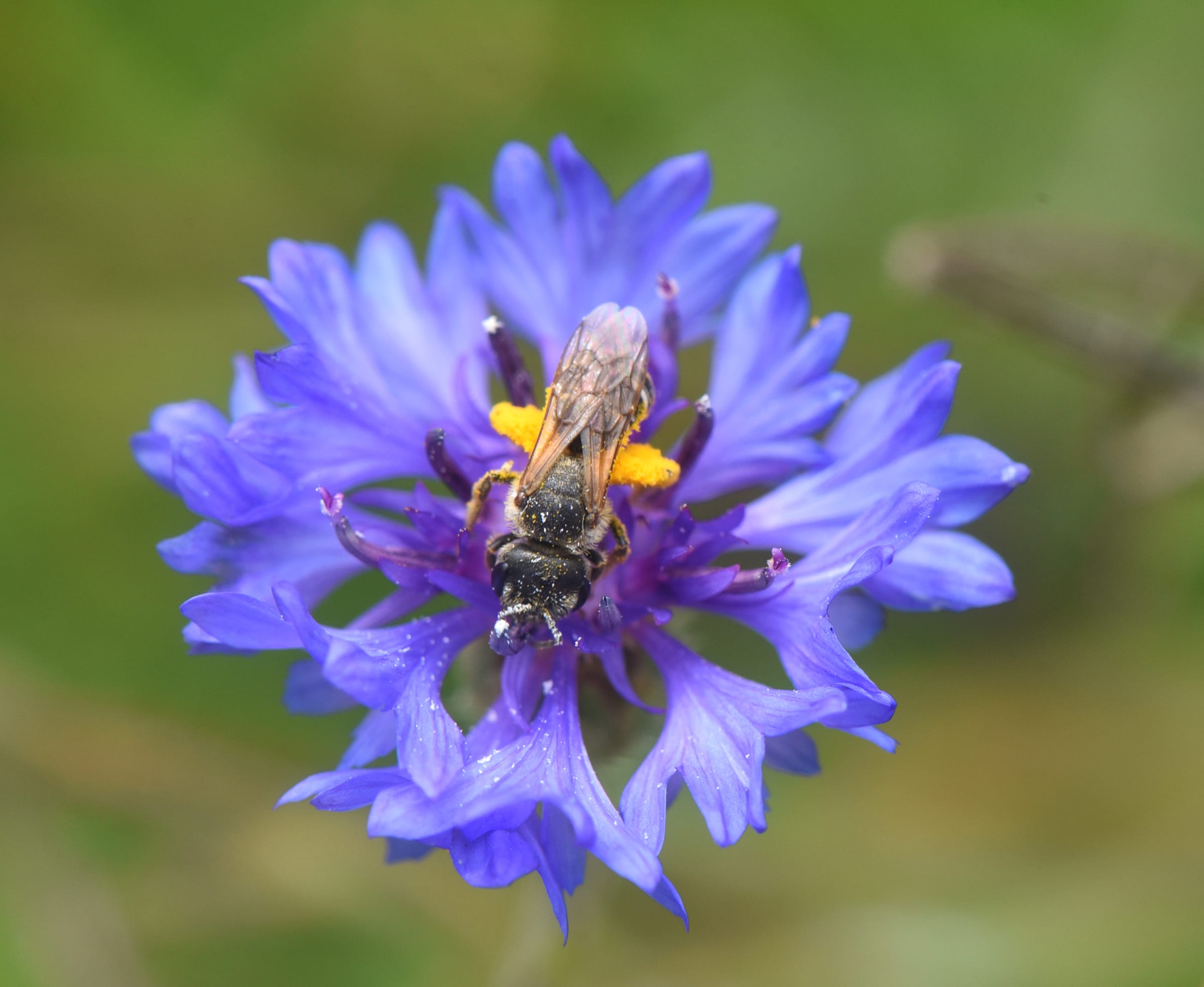
Bees particularly like blue, violet, and ultraviolet colors, which means flowers like blue cornflower, borage, agastache, and bluebeard will attract more bees!
Include windbreaks
Wind makes foraging difficult for bees and other pollinators, so adding more hedges, shrubs, and fences to your garden can help break up some of the gusts.

Leave A Comment